Every winter, homeowners in Old Uptown Harrisburg face the same battle: frigid drafts whistling through original single-pane windows that date back to the 1880s. Your Victorian or Colonial Revival home near the Pennsylvania State Capitol carries irreplaceable architectural character—but those gorgeous original windows were never designed for Central Pennsylvania’s brutal January temperatures that regularly plunge below 20°F.
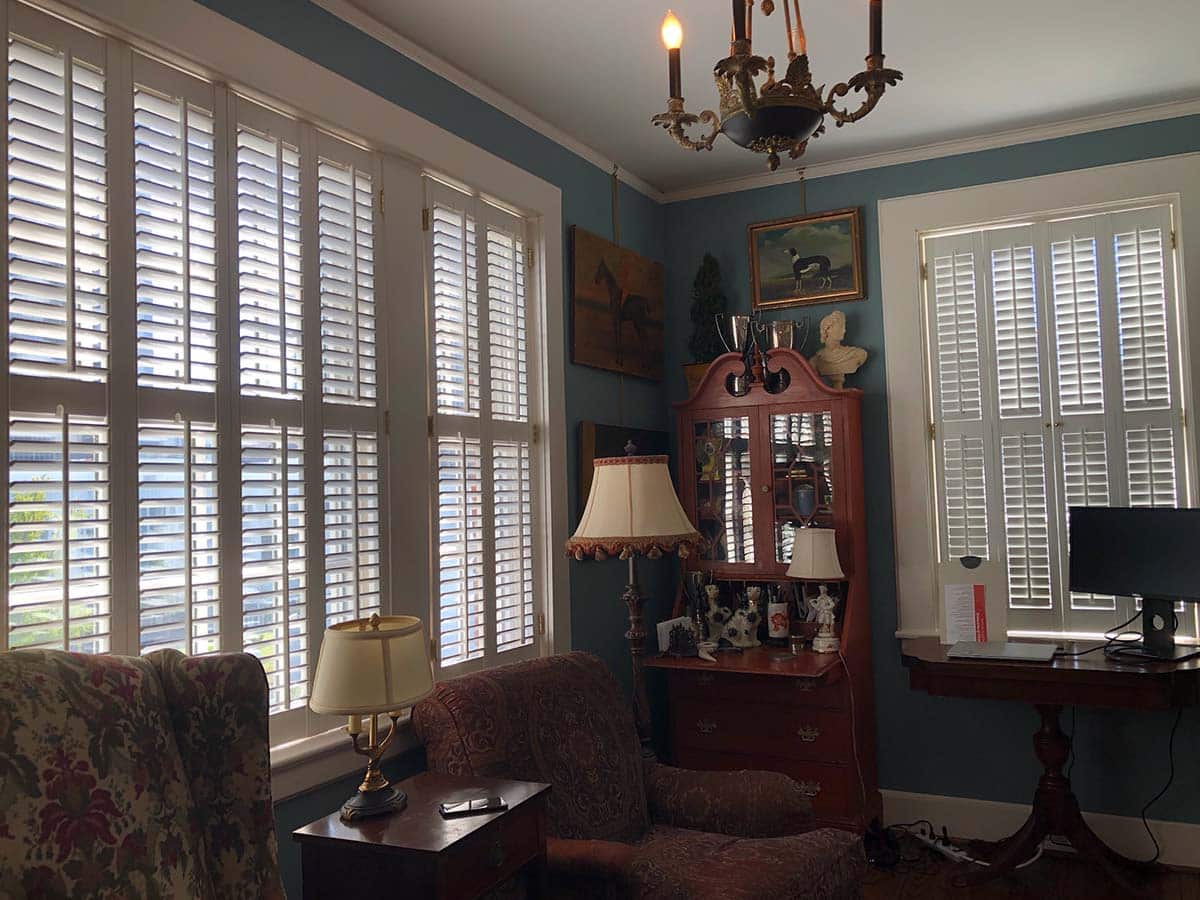
This creates a genuine dilemma for you. Replace those historic windows and you sacrifice authenticity (and potentially violate local historic preservation guidelines). Leave them alone and you watch your PPL Electric Utilities bills climb 30-40% higher than homes with modern insulation. Plantation shutters offer the third path Central PA preservation-minded homeowners increasingly choose: authentic period aesthetics combined with measurable energy efficiency gains.
Why Central Pennsylvania’s Historic Homes Need Specialized Window Treatments
The Single-Pane Window Problem in Pre-1920s Architecture
Homes built before 1920 across Central Pennsylvania—whether the Federal-style townhouses along Historic Downtown Lancaster or the ornate Victorians overlooking the Susquehanna—share a common weakness. Their original windows typically feature single-pane glass with R-values of approximately 0.9, compared to R-values of 2.0-3.7 for modern double-pane windows (Source: U.S. Department of Energy, 2023). That gap translates directly into heat loss.
Studies show that windows account for 25-30% of residential heating energy use in older homes (Source: ENERGY STAR, 2024). When your Federal-era home near Wheatland Estate has twelve original windows, you’re essentially heating the outdoors through those beautiful but thermally inefficient glass panes. Adding interior plantation shutters creates a documented air gap that reduces heat transfer by up to 45% compared to bare windows (Source: U.S. Department of Energy Window Attachments Study, 2021).
Why Generic Big-Box Solutions Fail Historic Homes
Standard vinyl blinds from chain retailers create visual dissonance in period homes. More critically, they lack the substantial construction needed to create effective thermal barriers. Your 1890s Queen Anne deserves treatments that match both its aesthetic gravitas and its functional needs. Plantation shutters with 3.5-inch or 4.5-inch louvers echo the proportions of historic millwork while providing the mass and fit necessary to block drafts at the window frame.
- Mass matters: Solid hardwood or composite shutters weighing 8-12 pounds per panel create genuine insulating barriers
- Custom fit is non-negotiable: Historic windows often feature non-standard dimensions that require precise measurement
- Frame profile must complement period trim: L-frames, Z-frames, and decorative frames each suit different architectural eras
Matching Plantation Shutter Styles to Central PA Architectural Periods
Victorian Homes (1860s-1900s): Harrisburg and Beyond
Victorian architecture across Central Pennsylvania features tall, narrow windows often exceeding 60 inches in height. The ornate trim work and deep window casings in neighborhoods like Old Uptown Harrisburg demand shutters that complement rather than compete. For your Victorian home, consider:
- 4.5-inch louvers that match the vertical emphasis of period windows
- Divider rails positioned to align with existing mullions or transoms
- Painted finishes in historically accurate whites, creams, or custom-matched heritage colors
The National Trust for Historic Preservation reports that appropriate interior treatments can enhance property values in historic districts by 5-15% compared to inappropriate modern additions (Source: National Trust for Historic Preservation Economic Impact Report, 2022).
Federal and Colonial Revival Homes (1780s-1850s): Lancaster County Classics
The symmetrical facades and understated elegance of Federal-period homes throughout Historic Downtown Lancaster call for restrained shutter designs. These homes often feature six-over-six windows with delicate muntins that you want to showcase, not obscure. Recommendations for your Federal or Colonial Revival property:
- 3.5-inch louvers maintaining proportional scale with smaller window panes
- Café-style installations covering lower sashes while leaving upper transoms visible
- Wood-grain stains complementing original interior trim if your home retains period millwork
“The goal is not to disguise your historic windows but to enhance their function while respecting their form. Properly specified plantation shutters become part of your home’s architectural story rather than an obvious modern addition.”
Energy Efficiency Gains: Real Numbers for Central PA Homeowners
Documented Winter Performance Improvements
Central Pennsylvania experiences approximately 5,500 heating degree days annually (Source: NOAA Climate Data, 2023), placing significant thermal demands on your home from November through March. When you install plantation shutters on single-pane windows, the measurable benefits accumulate quickly:
| Window Treatment | Estimated Heat Loss Reduction | Annual Heating Savings Estimate* |
|---|---|---|
| No treatment (bare single-pane) | Baseline | $0 |
| Cellular shades (single cell) | 20-25% | $120-180 |
| Plantation shutters (properly fitted) | 35-45% | $210-320 |
| Plantation shutters + weatherstripping | 45-50% | $280-380 |
*Based on average Central PA home with 12 original windows and current PPL Electric Utilities heating costs. Individual results vary based on home size, window condition, and heating system efficiency.
Summer Cooling Benefits You Shouldn’t Overlook
Your plantation shutters work year-round. During Central Pennsylvania’s humid summers—where temperatures frequently exceed 85°F from June through August—closed shutters on south and west-facing windows can reduce solar heat gain by up to 77% (Source: U.S. Department of Energy, 2023). This reduces air conditioning loads and protects your furnishings and original woodwork from UV damage that fades and degrades historic materials.
The Installation Process for Historic Properties
Pre-Installation Assessment
Your historic home requires more than standard measurements. A proper assessment for homes in Central Pennsylvania’s historic districts includes:
- Window condition evaluation: Identifying any rot, settling, or out-of-square conditions common in 100+ year-old frames
- Trim profile documentation: Ensuring shutter frames complement existing casings and sills
- Operation clearance verification: Confirming shutters won’t interfere with original hardware, radiators, or window seats
- Historic guideline review: Checking local preservation requirements if your home is in a designated historic district
Custom Fabrication and Fitting
Because homes near landmarks like the Pennsylvania State Capitol and Wheatland Estate often feature non-standard window dimensions, every panel requires individual specification. Unlike production shutters sold by national chains, properly executed historic home installations account for the 1/8-inch to 1/4-inch variations typical in hand-built period frames.
Ready to see how plantation shutters will look in your specific historic home? Schedule your free in-home consultation to see plantation shutter samples in your historic Central PA home today.
Why Central Pennsylvania Homeowners Choose Custom Plantation Shutters
Trust Built on Local Knowledge
Understanding Central Pennsylvania’s unique combination of historic architecture, harsh continental climate, and preservation-minded community requires specialized experience. Homeowners throughout the region—from the brick rowhouses of Lancaster to the grand Victorians overlooking Harrisburg’s Capitol Complex—consistently cite these priorities:
- Preservation of original windows: No drilling into historic glass or frames
- Reversible installation: Future owners can remove shutters without evidence of modification
- Authentic proportions: Shutter sizing that looks appropriate to the period, not like an afterthought
- Measurable energy savings: Documented reductions in heating costs visible on PPL Electric Utilities statements
Long-Term Value for Your Historic Investment
Quality plantation shutters represent a one-time investment that typically lasts 20-25 years with minimal maintenance (Source: National Association of Home Builders Remodeling Market Index, 2023). Compare this to fabric treatments requiring replacement every 7-10 years due to sun damage and dust accumulation. For your Central Pennsylvania historic home, plantation shutters deliver both immediate comfort improvements and lasting value.
Your historic home tells a story worth preserving. Schedule your free in-home consultation to see plantation shutter samples in your historic Central PA home today—and discover how the right window treatments honor your home’s past while improving its future performance.
Frequently Asked Questions
Can plantation shutters be installed without damaging original window frames in historic homes?
Yes. Professional installation for historic properties uses mounting techniques that attach shutters to the surrounding wall or trim rather than the original window frame itself. This preserves your antique glass and period hardware completely intact while still creating the tight fit necessary for draft reduction. When properly installed, shutters can be removed in the future without leaving visible evidence of modification—an important consideration if your Central Pennsylvania home falls under historic preservation guidelines.
How do plantation shutters compare to interior storm windows for energy efficiency?
Interior storm windows typically provide R-value improvements of 1.0-1.9, while properly fitted plantation shutters with closed louvers create equivalent insulating air gaps plus the added benefit of adjustable light control. Storm windows require seasonal installation and storage, whereas plantation shutters remain permanently mounted and operational year-round. For homeowners who want both maximum efficiency and daily functionality, combining plantation shutters with low-profile interior storm panels delivers the highest performance—though shutters alone satisfy most Central PA homeowners’ comfort and budget requirements.
What louver size works best for Victorian-era windows common in Harrisburg and Lancaster?
Victorian windows typically feature vertical proportions exceeding 2:1 height-to-width ratios, making 4.5-inch louvers the optimal choice for visual harmony. This larger louver size emphasizes the vertical lines characteristic of the period while providing excellent light control and view-through when open. For shorter Colonial-era windows or Federal-style six-over-six configurations more common in Lancaster County, 3.5-inch louvers maintain appropriate scale without overwhelming the smaller pane divisions.

