When January temperatures plunge below 20°F in Central Pennsylvania and your West Penn Power bill arrives looking like a mortgage payment, those charming double-hung windows in your State College Borough Colonial become the enemy. The brutal truth? Up to 30% of your home’s heating energy escapes directly through your windows (Source: U.S. Department of Energy, 2024). For homeowners in established neighborhoods from Bellefonte Historic District to the tree-lined streets near Penn State University, this isn’t just uncomfortable—it’s expensive.
This guide shows you exactly how energy efficient blinds in Central Pennsylvania can transform your home’s thermal performance, cut your FirstEnergy heating costs, and keep your family comfortable from November through March without cranking the thermostat to 74°F.
Why Central Pennsylvania Windows Hemorrhage Heat
Your home’s windows are its weakest thermal link, and Central Pennsylvania’s climate punishes that weakness relentlessly. Average winter temperatures in State College hover around 26°F, with frequent dips into single digits during polar vortex events (Source: NOAA National Weather Service, State College Station Data, 2023). Those picturesque Colonial and Cape Cod homes throughout the region—many built between 1940 and 1980—feature double-hung windows that were never designed for modern energy efficiency standards.
The Double-Hung Window Problem
Double-hung windows dominate Central Pennsylvania’s residential architecture for good reason: they’re beautiful, historically appropriate, and easy to clean. But their design creates inherent air infiltration problems. The meeting rail where upper and lower sashes connect allows cold air to seep through, even when locked tight. In homes near Beaver Stadium where game-day crowds fill the streets, owners report feeling cold drafts despite weatherstripping replacements. Single-pane versions—still common in Bellefonte Historic District properties—offer an R-value of just 0.9, compared to R-13 or higher for insulated walls (Source: ENERGY STAR Window Fact Sheet, 2023).
Your FirstEnergy Bill Tells the Story
West Penn Power residential customers in Central Pennsylvania paid an average of $147 per month in winter 2024, up 18% from 2022 rates (Source: FirstEnergy Quarterly Earnings Report, Q1 2024). Natural gas heating costs rose similarly. When you’re running your furnace constantly to compensate for window heat loss, those increases compound painfully. Installing cellular shades in State College addresses the root cause rather than just turning up the heat.
How Cellular Shades Outperform Every Other Window Treatment
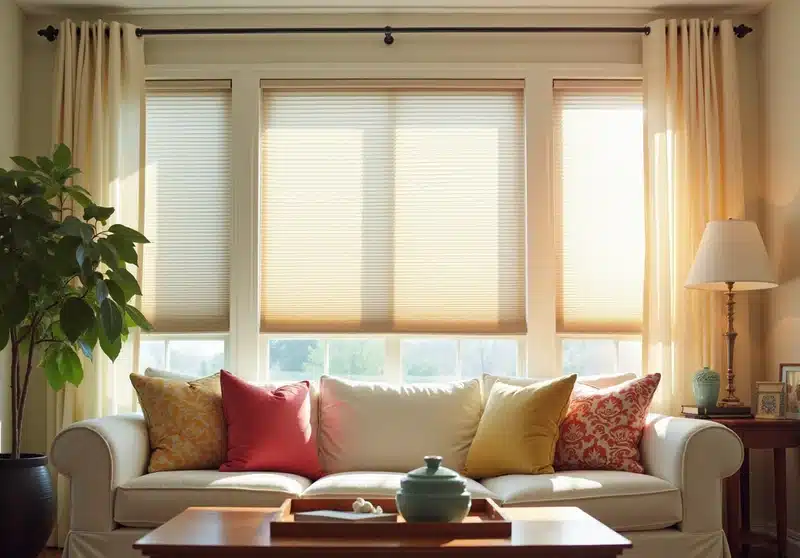
Not all window treatments deliver equal energy savings. Cellular shades—also called honeycomb blinds—use a fundamentally different approach than traditional blinds, drapes, or shutters. Understanding the engineering explains why they’ve become the go-to choice for energy-conscious Central Pennsylvania homeowners.
The Honeycomb Engineering Advantage
Cellular shades trap air in honeycomb-shaped pockets that act as insulation barriers between your warm interior and cold window glass. Single-cell designs work well for mild climates, but Central Pennsylvania winters demand double-cell or triple-cell construction. These multi-layered designs can improve window insulation by up to 80% compared to bare glass (Source: U.S. Department of Energy, Energy Saver Guide, 2024). The trapped air doesn’t conduct heat efficiently, creating a thermal break that keeps your heated air inside where it belongs.
R-Value Comparison by Window Treatment Type
| Window Treatment | Added R-Value | Best For |
|---|---|---|
| Standard aluminum blinds | 0.1-0.2 | Light control only |
| Wood blinds | 0.3-0.5 | Aesthetics, moderate climates |
| Lined drapes | 0.5-1.0 | Formal rooms, nighttime use |
| Single-cell shades | 1.0-2.0 | Mild winters |
| Double-cell shades | 2.0-3.5 | Central PA winters |
| Triple-cell shades | 3.0-4.5 | Extreme cold, passive homes |
For Colonial homes in State College Borough with six or more double-hung windows per floor, upgrading to double-cell honeycomb blinds can reduce heating energy consumption by 15-25% over a full winter season (Source: American Council for an Energy-Efficient Economy, Window Attachment Study, 2023).
Selecting the Right Cellular Shades for Central Pennsylvania Homes
Your specific situation—home age, window condition, sun exposure, and neighborhood aesthetic requirements—determines which cellular shade configuration delivers maximum return on investment. Here’s how to match product specifications to Central Pennsylvania conditions.
Cell Size and Pleat Depth
Cellular shades come in three standard cell sizes:
- 3/8-inch cells: Compact profile, best for small windows and shallow frames common in Cape Cod dormers
- 3/4-inch cells: Most popular size, balances insulation and aesthetics for standard double-hung windows
- 1-inch cells: Maximum insulation, ideal for large picture windows and sunrooms facing north or west
For the typical 30×60-inch double-hung windows in Bellefonte Historic District homes, 3/4-inch double-cell shades provide the optimal balance. Larger great room windows benefit from 1-inch cells despite higher costs.
Light-Filtering vs. Blackout Options
Central Pennsylvania homeowners face a choice between maximum light during short winter days and maximum insulation:
- Light-filtering fabrics: Allow soft natural light while blocking UV rays; slightly lower R-value
- Room-darkening fabrics: Block 95% of light; excellent for bedrooms and media rooms
- Blackout with side tracks: Highest insulation; eliminates edge gaps for near-complete thermal seal
For south-facing windows near Penn State University campus, light-filtering options let you capture passive solar heat during sunny winter afternoons. North-facing windows benefit from blackout versions since you’re not gaining solar heat anyway.
Operating Styles for Different Needs
How you’ll use your insulating window treatments in PA daily affects which operating mechanism makes sense:
- Cordless lift: Clean appearance, child-safe, manual operation via bottom rail
- Top-down/bottom-up: Flexible positioning for privacy plus light; costs 20-30% more
- Motorized: Programmable scheduling, smart home integration; highest cost but best for hard-to-reach windows
Motorized shades programmed to lower at sunset and raise at sunrise can optimize your heating efficiency automatically—particularly valuable if your daily schedule takes you away from home during peak daylight hours.
Installation Considerations for Maximum Energy Savings
Even premium cellular shades underperform when installed incorrectly. Proper mounting technique matters as much as product selection for achieving real energy savings in your Central Pennsylvania home.
Inside Mount vs. Outside Mount
Inside-mount installations fit within your window frame for a clean, built-in look that complements Colonial and Cape Cod architectural details. However, inside mounts leave small gaps at the edges where air can circulate around the shade. Outside-mount installations cover the entire window frame, eliminating edge gaps but creating a more prominent visual presence.
For maximum energy efficiency in Central Pennsylvania’s harsh winters, we recommend outside-mount installations with at least 1.5 inches of overlap on all sides. The thermal performance improvement typically outweighs aesthetic concerns, especially for north and west-facing windows that receive the coldest winter winds.
Side Track Systems for Serious Cold
If you’re committed to maximizing savings on your West Penn Power bills, consider cellular shades with integrated side tracks. These channel systems guide the shade fabric along both vertical edges, virtually eliminating convection loops where warm air rises, cools against the glass, and falls back into the room. Side-tracked systems can improve insulation performance by an additional 24% compared to standard mounts (Source: Lawrence Berkeley National Laboratory, Windows and Daylighting Group Study, 2022).
Professional Measurement Matters
Central Pennsylvania’s older homes rarely feature perfectly square window openings. Settlement, humidity cycles, and decades of seasonal expansion and contraction create variations that require precise measurement. A 1/4-inch error means visible light gaps that defeat the purpose of energy-efficient window treatments. Your free in-home consultation includes exact measurements of every window, ensuring your cellular shades fit precisely.
Real Savings: What Central Pennsylvania Homeowners Report
Local results demonstrate that theoretical R-value improvements translate to actual bill reductions when products are properly selected and installed.
Documented Customer Outcomes
Margaret T., State College Borough: After installing double-cell honeycomb blinds on 14 windows in her 1965 Colonial, Margaret tracked her FirstEnergy statements month-over-month. Her January 2025 heating costs dropped 23% compared to January 2024, despite similar degree-day totals. She specifically noted the elimination of cold drafts near her kitchen’s east-facing window where she’d previously felt chilly air while making morning coffee.
Robert K., Bellefonte Historic District: Robert’s 1890 Victorian presented unique challenges—tall, narrow windows with ornate trim he couldn’t cover. Custom-sized single-cell shades with inside mounts preserved the historic character while cutting his combined gas and electric heating costs by $47 monthly during peak winter months. Over the 2024-2025 heating season, his total savings exceeded $280.
Jennifer and Mark S., near Penn State University: This young family installed motorized cellular shades throughout their Cape Cod, programming them to lower automatically at 5:30 PM and raise at 7:00 AM. With a toddler and demanding work schedules, they’d previously forgotten manual adjustments regularly. The automated system reduced their West Penn Power bills by 19% while eliminating daily hassle—a combination they called “completely worth the investment.”
Getting Started: Your Next Steps
With another Central Pennsylvania winter approaching and energy costs showing no signs of decreasing, now is the optimal time to upgrade your windows’ thermal performance. The cellular shades you install this fall will pay dividends every heating season for years to come.
Consider the windows in your home that feel coldest—typically north-facing bedrooms, older sections with original glass, or large picture windows in living areas. These high-priority locations deliver the fastest payback on your investment in energy efficient blinds for Central Pennsylvania homes.
Whether you live in a historic Bellefonte property with preservation requirements or a 1970s Colonial near Beaver Stadium, customized solutions exist that match your architectural style, budget, and energy goals. Schedule your free in-home consultation today and start saving on energy bills before next winter arrives.
Our local specialists understand Central Pennsylvania’s unique combination of harsh winters, historic architecture, and hometown value priorities. We’ll measure every window, recommend the right cell configuration for your specific situation, and provide a detailed quote with projected energy savings. Don’t spend another winter watching your heating dollars escape through underperforming windows—get your free quote now and take control of your comfort and costs.
Frequently Asked Questions
How long do cellular shades typically last in Central Pennsylvania’s climate?
Quality cellular shades installed in Central Pennsylvania homes typically last 7-10 years with normal use. The region’s humidity fluctuations between humid summers and dry heated winters can affect fabric longevity, but modern polyester and spun-lace materials resist degradation well. Motorized components may require battery or motor replacement around year 5-7, while cordless manual mechanisms generally last the full shade lifespan without service.
Can I install cellular shades myself or should I hire a professional?
While cellular shades are technically DIY-friendly for handy homeowners, professional installation typically delivers better energy performance. The precise measurements required—especially in older Central Pennsylvania homes with out-of-square window frames—benefit from experienced installers using specialized tools. Professional installation also ensures proper bracket placement for smooth operation and eliminates gaps that compromise insulation. Most providers include installation in their pricing, making DIY savings minimal compared to performance risks.
Do cellular shades qualify for any energy efficiency rebates or tax credits in Pennsylvania?
Pennsylvania does not currently offer state-level rebates specifically for cellular shades, though some utility companies periodically run efficiency incentive programs worth checking. At the federal level, the Inflation Reduction Act’s energy efficiency provisions focus primarily on windows, doors, and HVAC systems rather than window treatments. However, your energy savings—averaging $150-400 annually for whole-home installations—provide the primary financial return. Keep purchase receipts regardless, as tax incentive programs occasionally expand retroactively.
What maintenance do honeycomb blinds require during Central Pennsylvania winters?
Cellular shades require minimal winter maintenance. Dust monthly using a vacuum with brush attachment on low suction to prevent debris from settling into honeycomb cells. Avoid moisture exposure—condensation common on cold Central Pennsylvania windows can wick into the cellular structure and promote mildew if shades contact wet glass directly. Maintain at least 1/2-inch clearance from window surfaces. For motorized versions, check battery levels before November to ensure reliable operation throughout the heating season.

